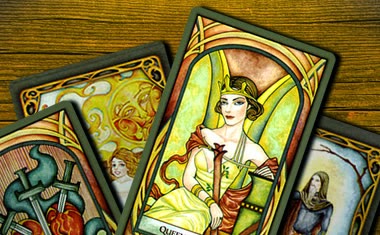
The Major Arcana consists of the first twenty-two cards in the Tarot deck. Representing our karmic destiny, these cards reveal which lessons we must learn in our life. They also explain how events will play themselves out. Each card in the Major Arcana represents one step in the universal journey of human life.
The Magician:
This arcane more astrologically belongs to Neptune and Saturn. In esoteric numerology his corresponding Hebrew letter Alef. The representation of The Magus is unity, the principle, the synthesis of numbers, the personal self, the idea of God, started up.
Straight:
If there is one man in front of you and is young, this arcane represents the person who is doing the consultation, to whom Call it from now "consultant". Therefore, El Mago symbolizes a boy. This letter is positive, indicating the work, cunning, strength of character and willpower. He also spoke of a person working with their hands and skilful at work, in business and in business.
Reversed:
If the letter goes upside, this reflects a man arcane weak, unable to make decisions, mean spirited and dishonest. Also Is the lack of scruples, and the delay in business by indecision.
The High Priestess:
The arcane High Priestess of astrologically belongs to Venus and Uranus. His point is Bet Hebrew and represents the mysterious woman and hidden, and middle-aged, unmarried, separated, divorced or widowed. I chestnut complexion and hair. It is an intelligent person, but we should not rely on it because rarely uses his intelligence to do good. In fact, it may represent a rival.
Straight:
When you leave this letter, the general meaning is the lack of scruples. It symbolizes a woman who esoteric, so can confuse. Teaches one side very good, but it is quite possible that we betrayed.
Reversed:
If the letter goes inverted, The Priestess speak of a woman intolerant, selfish, evil, hypocritical. This is a rival or enemy. It also represents a kind of woman who can have powers witch, and that always makes you want evil.
The Empress:
Astrológicamente belongs to Venus and the Sun. His point is Guimel Hebrew. This is a good letter involved in the creation and love supreme.
Straight:
The Empress symbolizes a young woman, between 20 and 40 years. On many occasions can represent the person consultant. It is beautiful and intelligent, and has a lot of wealth inside. Stay tuned because it also may represent a pregnancy, especially if you leave next to the mysterious El Diablo. This is an honest and hard-working person. It often well placed and relates to the upper echelons.
Reversed:
When the letter turns out inverted The Empress, you encounter a lack of generosity, indecisions and falsehoods. For naturally, may also be a betrayal, any person who is in your environment or the consultant is defraudaros ready to sample.
The Emperor:
This arcane represents astrologically to Aries. Your planets are Uranus, the Sun and Mars. Also, red symbolizes the Natural Forces.
Straight:
The Emperor evokes a man of middle-aged, well-off, something canoso, caring and highly intelligent. Everything intends to be successfully resolved, but numerous efforts. Therefore, a person constantly in her work, a good father and good boss.
Reversed:
When this letter goes upside is warning of the presence of a person of weak character and sometimes a little cruel to the others. It also indicates that you can face any failure in business or any business.
The Hierophant / The High Priest:
The more arcane The High Priest of astrologically belongs to Taurus, and its planets are Jupiter and Uranus. His point is I have Hebrew and represents faith and religiosity. This letter shows someone with much knowledge, a person educated.
Straight:
Actually it is good that you leave this letter, congratulations! It symbolizes a person wise, discreet and often humble give very good advice and wasted goodness. You can always count on him or her if you need it. It also indicates wedding or baptism, ie celebration.
Reversed:
If the letter turns out inverted, The High Priest is showing you a person of depression, without the courage to continue fighting and With a few strokes of hypocrisy.
The Lovers:
The more arcane Los Valentine astrologically belongs to Pisces. Your planets are Saturn and Sun and Hebrew letter is Vav. Whenever you leave this letter represent the duality between the good and evil. You know, we will have to choose between two paths.
Straight:
This letter is showing you a person enamoradiza. It symbolizes work, honesty and sincerity. Sometimes it may represent the beginning of a new love, but with many uncertainties. It will be decisive when it comes to cut a relationship.
Reversed:
When this letter leaves us is showing an inverted unrequited love, but it can also refer to a failure or a temporary separation in a marriage or in a stable relationship. He also announced that there will be obstacles.
The Hanged Man / Trolley:
This arcane astrologically belongs to Cancer and its planets are Mars and Saturn. His letter Hebrew zain, a sacred symbol in all its aspects. Also, the arcane El Carro shows seven days of creation and represents the truth as the greatest exponent.
Straight:
When they appear in this spin, this is showing us more arcane long journeys by land, sea or air. It symbolizes advances in the life or progress in the workplace. This arcane shows two ways: either move forward or we stayed. It may also indicate a new relationship.
Reversed:
If the arcane El Carro invested leaves us is telling me it is going to frustrate a trip we had planned perform. It may also refer to a project that is not going to perform or obstacles that may arise.
The Justice:
The more arcane of Justice belongs astrologically Leo, its planets are Mars and Jupiter, and Hebrew letter is Feh. When this letter is representing justice and the law, ultimately, the refinement.
Straight:
The Justice us about roles of lawsuits from the administration. It shows us to be a fair, a laws of man or a person with a sense of justice. It may also represent a divorce or any problem with the law that we have not yet resolved.
Reversed:
When you leave reversed the arcane of Justice, we will be showing an unexpected lawsuit or a person unfairly. You can even be talking about a lawyer who is left to buy. Of course, it can also be referring to a trial that is lost but with a lot of problems.
The Hermit:
The largest of arcane The Hermit astrologically belongs to Virgo, and Tet is a Hebrew letter. When this letter represents reason and knowledge, but is also symbolizing the prophets.
Straight:
This arcane shows a spiritual person, but also represents the search inside, wisdom, discretion and meditation. You can also make reference to the medicine and could show a doctor. As remark, it is a very arcane spiritual.
Reversed:
When the mayor of arcane The Hermit invested leaves us is talking about recklessness, wrong, even false.
The Wheel of Fortune:
The more arcane of the Wheel of Fortune astrologically belongs to Jupiter, and Hebrew letter is Iod. That letter speaks of the divine, science tight, the palms.
Straight:
This is one of the best cards of the Tarot of Marseilles. When we announced changes luck in the games random or fortuitous success, but also can refer to an inheritance. On certain occasions, the arcane of the Wheel of Fortune announces success in business.
Reversed:
If the arcane largest Wheel of Fortune appears in the print run of upside we will be announcing failures, losses economic, and even obstacles.
The Strength:
The arcane largest ISAF astrologically belongs to Leo. His Hebrew letter is Kaf. When see this letter represents the strength, struggle and also the string magic.
Straight:
The force represents a young man whose age ranges between 28 and 40 years or so. It is high and strong, and has a great inner domain. This is an enterprising person who has a lot of courage. Therefore, this arcane symbolizes someone strong, it could refer to an industrialist or an executive with a lot of class, very well prepared for business.
Reversed:
When the arcane largest ISAF leaves you invested, we will be pointing to a weak person, petty and lack of faith, sometimes it can even be desaprensiva.
The Chariot / The Perch:
The largest of arcane The Perch astrologically belongs to the signs of water. His point is Hebrew lamed. It represents the great work, the science of man, the twelve apostles in the twelve signs of zodiac.
Straight:
This letter symbolizes acceptance of the sacrifice, abandonment, lack of clarity, the indecision in the past or in the present. It also reflects suffering, we can stand before a person who will do or will be made many sacrifices.
Reversed:
It was strange, but when the game comes, we invested is pointing to a person who gets everything without any sacrifice, that accepts the mome nto who are living and that feels good. As you will see, in this case this is very arcane higher positive.
The Death:
The arcane of Death belongs to astrologically Scorpio. Your planets are Mars and Saturn, and Hebrew letter is incumbent Mem. This letter represents the rebirth so intriguing, the principle renovator, processing and intuition, but also symbolizes, of course, death.
Straight:
If you spin the sale of more arcane Death, you can interpret and unexpected changes inevitable, but also wisdom, changes from one state to another-which can be good or bad, and lost someone. Pismu Launches a call for caution in business.
Reversed:
When Death comes inverted, you are very slow to change, accidents, sometimes caused by an inertia. In any event, the number thirteen covered many forces d istintas, for example, Jesus was the number thirteen among his apostles.
The Temperance:
The arcane The largest Templanza astrologically belongs to Aquarius and is governed by air and water. His point is Hebrew Nun. It is a letter representing a woman in conciliatory all aspects of life, a person with a great aura. It also symbolizes the transformation.
Straight:
The Temperence refers to cooperation, and in this sense, represents a person harmonious. So this more arcane also shows an exemplary mother, tolerant, calm and inspire much confidence.
Reversed:
When the arcane Templanza The largest sale was invested by pointing to a situation of frustration, discord or revenge. In short, it represents a person with a bad temper.
The Devil / El Diablo:
The more arcane the El Diablo astrologically belongs to Capricorn and its planets are Saturn and Mercury. His point is Samej Hebrew. When this letter appears in a print run of tarot represents evil, evocations, the material world, selfishness and the black magic.
Straight:
The more arcane the El Diablo shows a great magnetism for sexual attraction and refers to power hidden. He is also representing a materialistic person to tread that he does not care who is getting as long as his goal. If refers to the workplace, be careful!, The person who is behind this letter always want access the best seats in the workplace.
Reversed:
When the mayor of arcane The Devil appears in a spin, is referring to the release of ligatures of evil. It represents disorder, investment and this is a letter that must always be taken into account.
The Tower:
The arcane largest Tower is a regent planet Pluto, and their handwriting is Hebrew Ain. When see this arcane represents more war, destruction. We shows spells in the temple, the return of original sin. Ultimately, this letter symbolizes negative influences.
Straight:
This letter speaks of economic loss, destruction, theft or fraud. You can also represent a pregnancy in which any small problem can arise, such as a caesarean section. Another aspect that shows this is the letter distrust, so if this comes out in the arcane spin, beware!, Someone can fool us.
Reversed:
If the circulation of the tarot leaves invested more arcane de La Torre, showing us is a difficult situation to nowhere. Also Deal with oppression and life routine.
The Star:
The arcane largest astrologically belongs to The Star Pisces, and its planets are Saturn and Pluto. His point is Hebrew Peh. When a print run of tarot appears this letter, represents the astrologers, intuitive and sensitive people. In fact, this is a letter that has a lot of light.
Straight:
The Star refers to the hope, the rebirth, but it can also refer to someone with a lot of intuition, caring and compassion. In some cases it is a symbol of hope that may arise after awakening of a crisis. In ultimately, represents new airs.
Reversed:
If the mayor of La Estrella arcane invested sale is representing unmet expectations, but also can make reference to indecision, a lack of will, and even to some obstruction.
The Moon:
Astrológicamente, more arcane of the Moon belongs to Aquarius, and is Tsadi Hebrew letter. This arcane represents occultism, the mysteries, esotericism and hierarchies.
Straight:
The more arcane of the Moon is representing intuition, but very dark. Refers to treason, to blackmail, to the hypocrisy and falsehood. In addition, we spoke of the magic that is not very good.
Reversed:
When the arcane more of the Moon leaves invested in the round of the tarot is showing us a disappointment. This can be a warning before it is consumed that evil or harm that we are moving forward.
The Sun:
The more arcane of The Sun belongs to astrologically Mercury, the Moon and the Sun. His point is Hebrew kuf. This is one of the best letters may appear in a print run of tarot. It is a letter extraordinary. Represents the Philosopher's Stone, light, universal love and reason.
Straight:
The more arcane of the Sun shows talent and good feelings. Represents the positive energies and refers to a person who shines in life, but it also has to fight for it.
Reversed:
When the mayor of El Sol arcane invested leaves us about loneliness. You can also make changes or be vaticinando refer to a very bleak future.
The Judgement / Reckoning:
The largest of arcane The Reckoning astrologically belongs to the fire and Hebrew letter is Resh. When the circulation of this letter appears tarot refers to meditation, but is also representing the resurrection and the prophecies.
Straight:
The largest of arcane The Reckoning refers to the updating of the past, although it can also symbolize the apostolate. In sometimes this more arcane shows a person who may have been a priest or nun and that maybe what has left, or even may be someone who continue to exercise the priesthood. The trial also may show a good father who has to spend a lot of evidence in the home. Represents always at home, the children and parents and all those who have a bit confused their profession In life.
Reversed:
When the mayor of arcane The Reckoning sale invested, we spoke of the inability to understand the facts. You can also referring to a divorce or a breakdown in the marriage. In some cases it may mean a robbery, and even an insanity.
The World:
The arcane largest astrológicame nte The World belongs to Saturn and its planet is Mercury. His letter Hebrew is Shin. Where this leaves more arcane in a spin, is representing all the triumph and divination.
Straight:
The largest of arcane The World is one of the best cards that can go into the spin. It also announces changes inside and inner peace. It also represents science, refers to thoughts clear and symbolizes light. You know, this is a very good letter that gives us peace and tranquility.
Reversed:
When the mayor of arcane The World invested leaves us is showing a depression. In fact, refers to the sadness and the carelessness.
The Fool:
The more arcane the El Loco is a Hebrew letter Tav and always comes in a circulation of tarot represents the whole of the universal key.
Straight:
The more arcane El Loco shows a person who sometimes behaves like a vagabond, or even if not it is, it seems. I do not know very well where it is going, or what he wants. It conforms with anything. This is someone who walks aimlessly, which has no expectations. It can be depressing, and sometimes even seems be or intends to prove that he is insane. Look well because we are telling me that some deception we can suffer.
Reversed:
If more arcane El Loco appears invested in the spin, is showing insecurity, loneliness. It representing vagabundea someone without knowing where you are going, a person who gives you all the same.